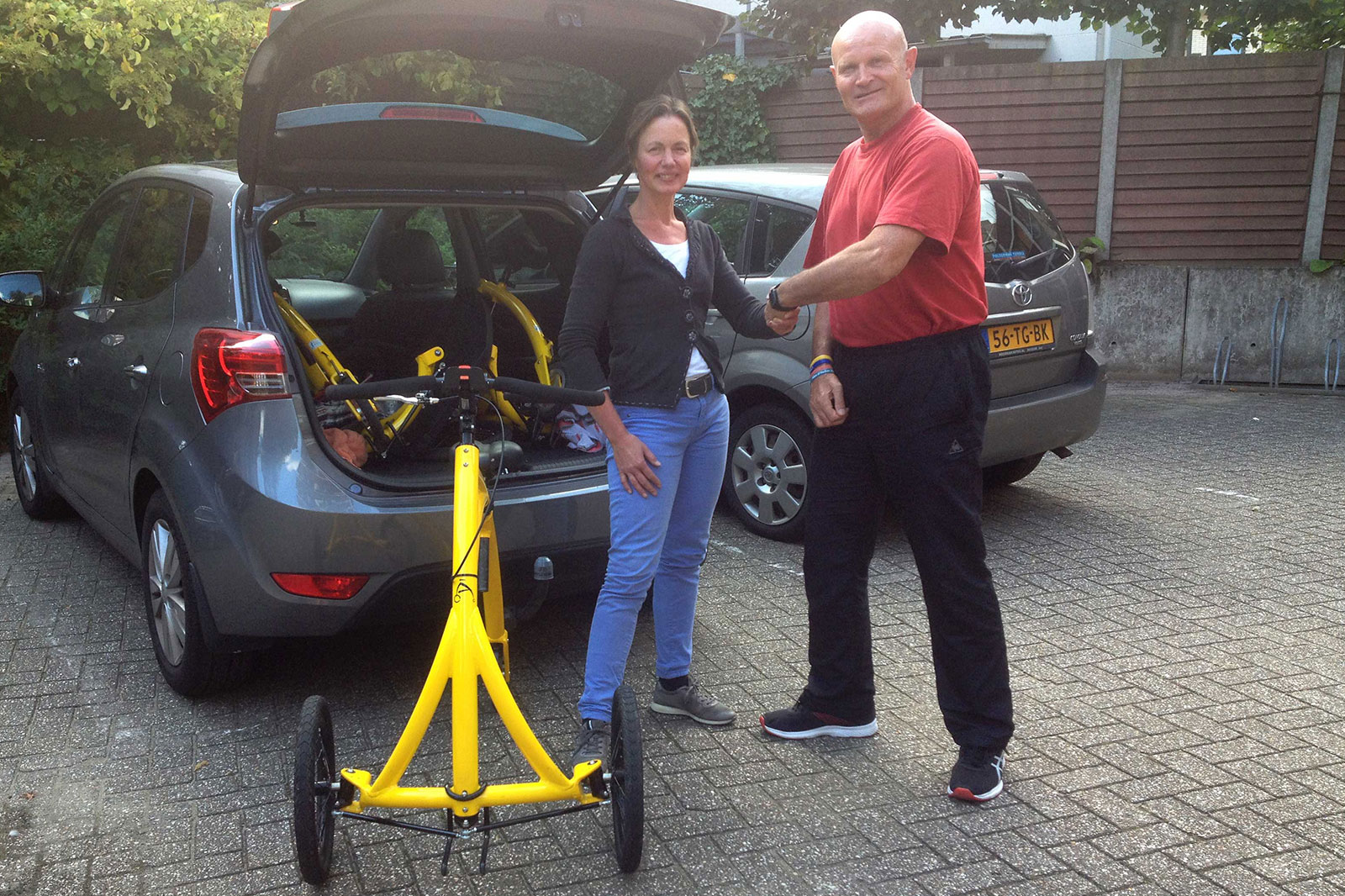
The Alinker, my findings with this tool.
Hello everyone, here’s a message from me, Wilco Giesen. An enthusiastic Alinker user with ABI, who’d like to share his experiences with you. After suffering a massive stroke (CVA) out of the blue on July 27, 2014, my life was turned upside down, to use a phrase like that. Acquired Brain Injury (ABI), including permanent, half-sided paralysis on the right side, is now my lot. I was a busy, athletic person. Now it was all over; I had to relearn many ordinary, everyday tasks like standing, walking, eating, drinking, and speaking normally. As a fanatic athlete, I was in a wheelchair!
I’m now three years into it, three years of extensive, intensive mental and physical rehabilitation. Physically, this means physiotherapy several times a week, (frequent) cycling on a modified 3-wheel recumbent bike, swimming with a wet belt, and, again, walking to the best of my ability. A period of falling, getting up, and above all, persevering! But the walking, in particular, has lagged considerably. I can no longer walk long distances, in particular. However, you keep looking and searching for ways to find your way back up. Consulting with experienced professionals, fellow sufferers, and other people who might be able to put you on the right track.
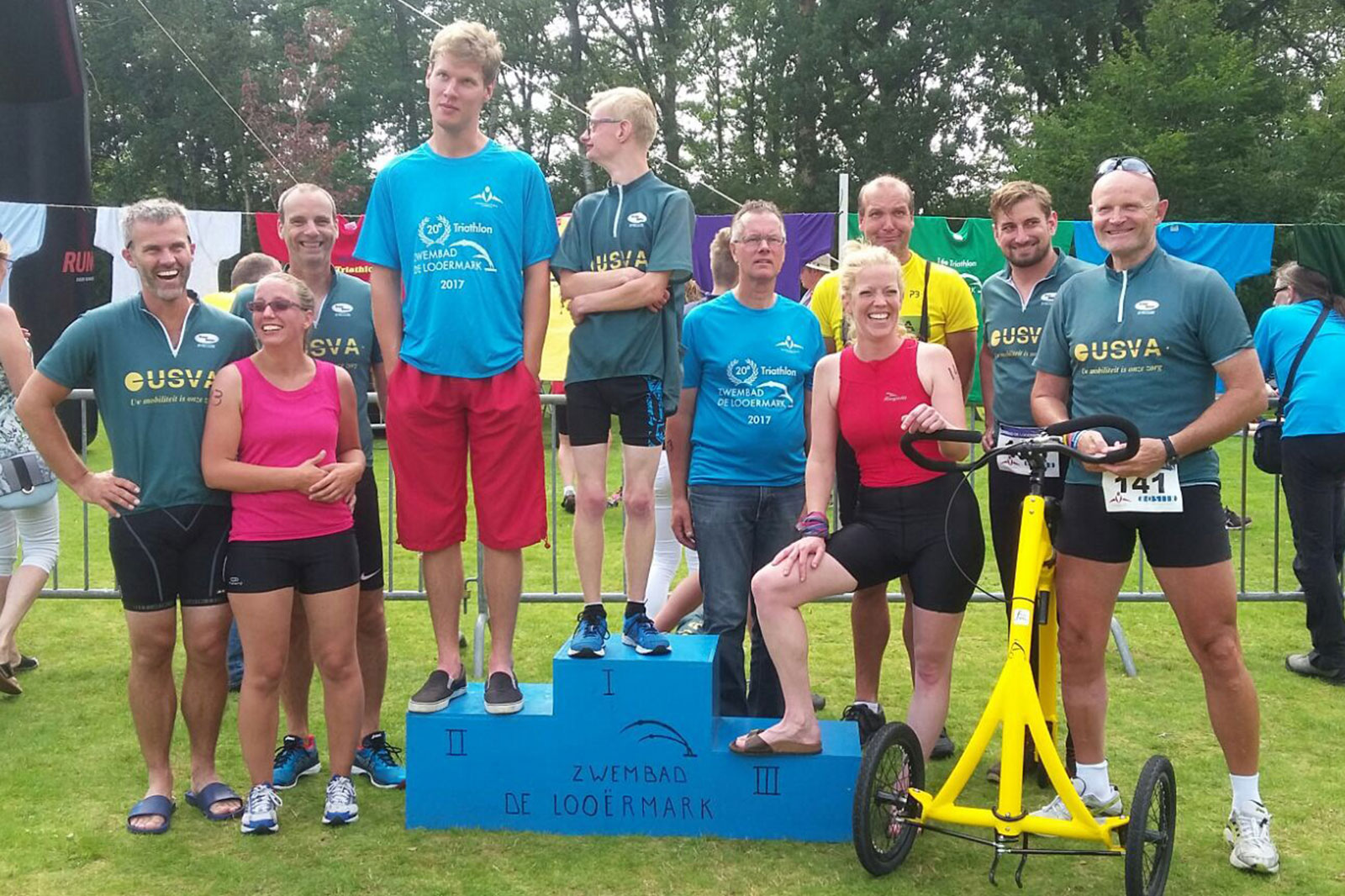
This brought me into contact with “Hersenletsel on Tour,” a working group of the patient association Hersenletsel.nl. With this group, made up of volunteers affected by ABI, we go on an annual six-day bike tour across the country to raise awareness for ABI, European Stroke Day, and to raise money for adapted rehabilitation cycling and walking aids. Getting and staying active is crucial for everyone, but especially for people with acquired brain injury!
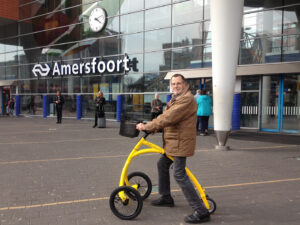
And so, during my online search, I came across the Alinker, a walking aid. It sounded appealing! My physiotherapist and a few others in the same situation visited Sjoukje Ziel of “Vierfiets” in Amersfoort. She’s a very enthusiastic, highly committed supplier of the Alinker, among other products. I was immediately sold! Despite my partial paralysis, I saw new opportunities and possibilities! After trying the Alinker, an extremely stable balance bike, for a while, including with a few others in the same situation, I’ve now had one for six months. What an invention this is!
At first, it took quite some getting used to: the fear of falling, the new way of moving, the new me. At first, I could only walk a short block around my village. This, of course, was mainly due to getting used to it, my posture, and the technique. Using only one side of my body after my stroke took quite some getting used to. But now I’ve come to know and appreciate the Alinker! I’ve now really mastered my driving lessons and the “vehicle control” part! “Alinking” is becoming easier and easier. By “Alinking,” I mean stepping forward with one leg. I’m also trying to pick up and improve my normal “walking,” but this is going significantly less well and certainly slower, probably due to the half-sided paralysis.
Thanks to the Alinker walking bike, I can now walk normally again. Going to a museum or zoo with the family, for example, or just an afternoon of shopping (if you’re into that, haha). I can be more active in “normal” life again. Even walking tours, at a pace and distance, are possible again.
The Alinker has allowed me to actively do all sorts of things again, activities that I normally wouldn’t be able to do. And if you happen to get tired while “Alinking,” no problem. The saddle is comfortable, or you can just stop for a cup of coffee!
The Alinker is a real lifesaver for me. Normally, I’d have to use a wheelchair for these kinds of outings, only to be driven around! Now I can easily get around on my own again, I’ve become much more mobile, and I’m back in control. The Alinker gives you enormous freedom of movement again, and it significantly increases your range.
I also work on my overall fitness, which is another pleasant side effect.
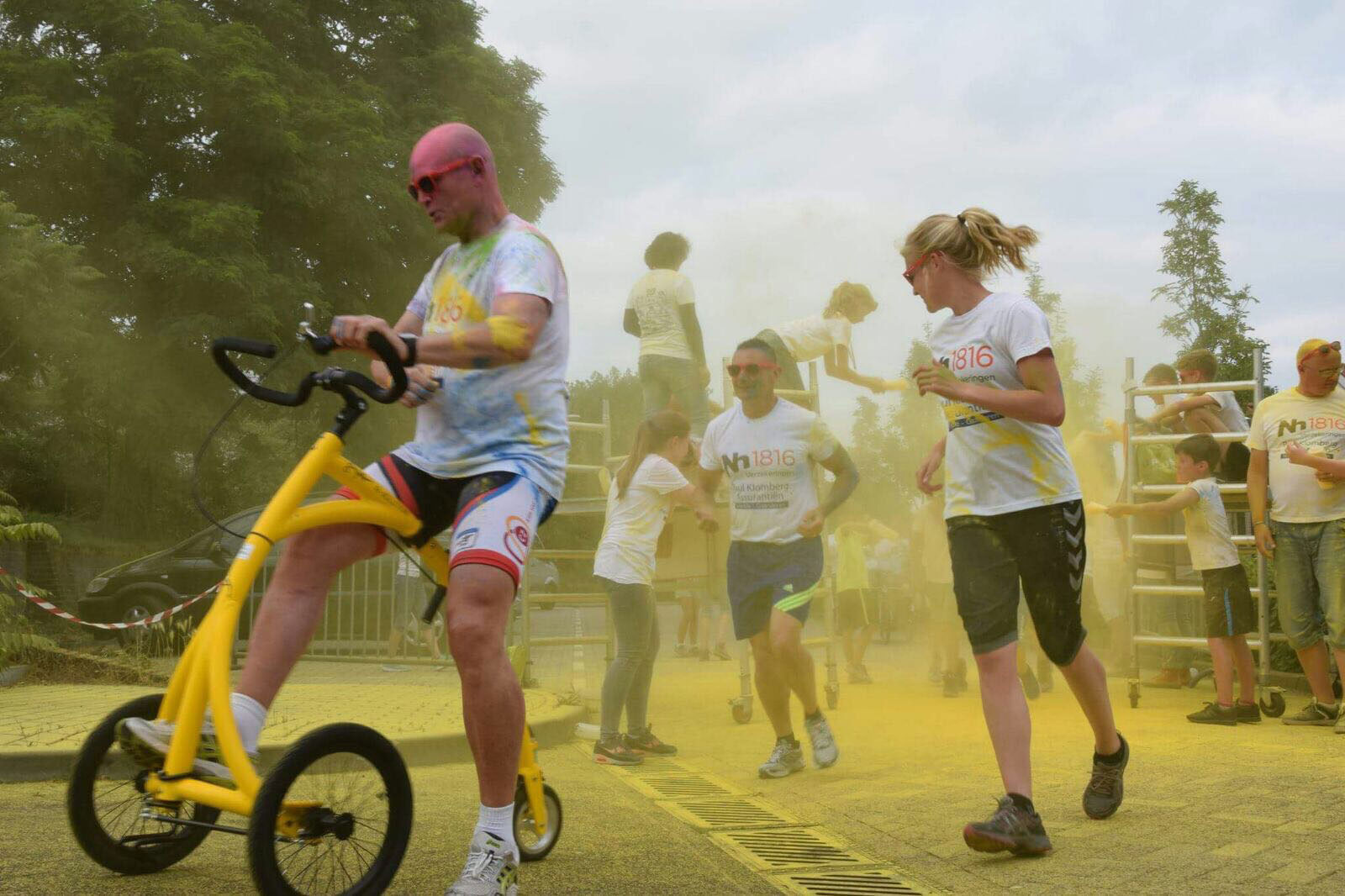
I’ve also managed to achieve new athletic goals this way. I recently completed 20 kilometers on the Alinker scooter at a speed of about 12 km/h.
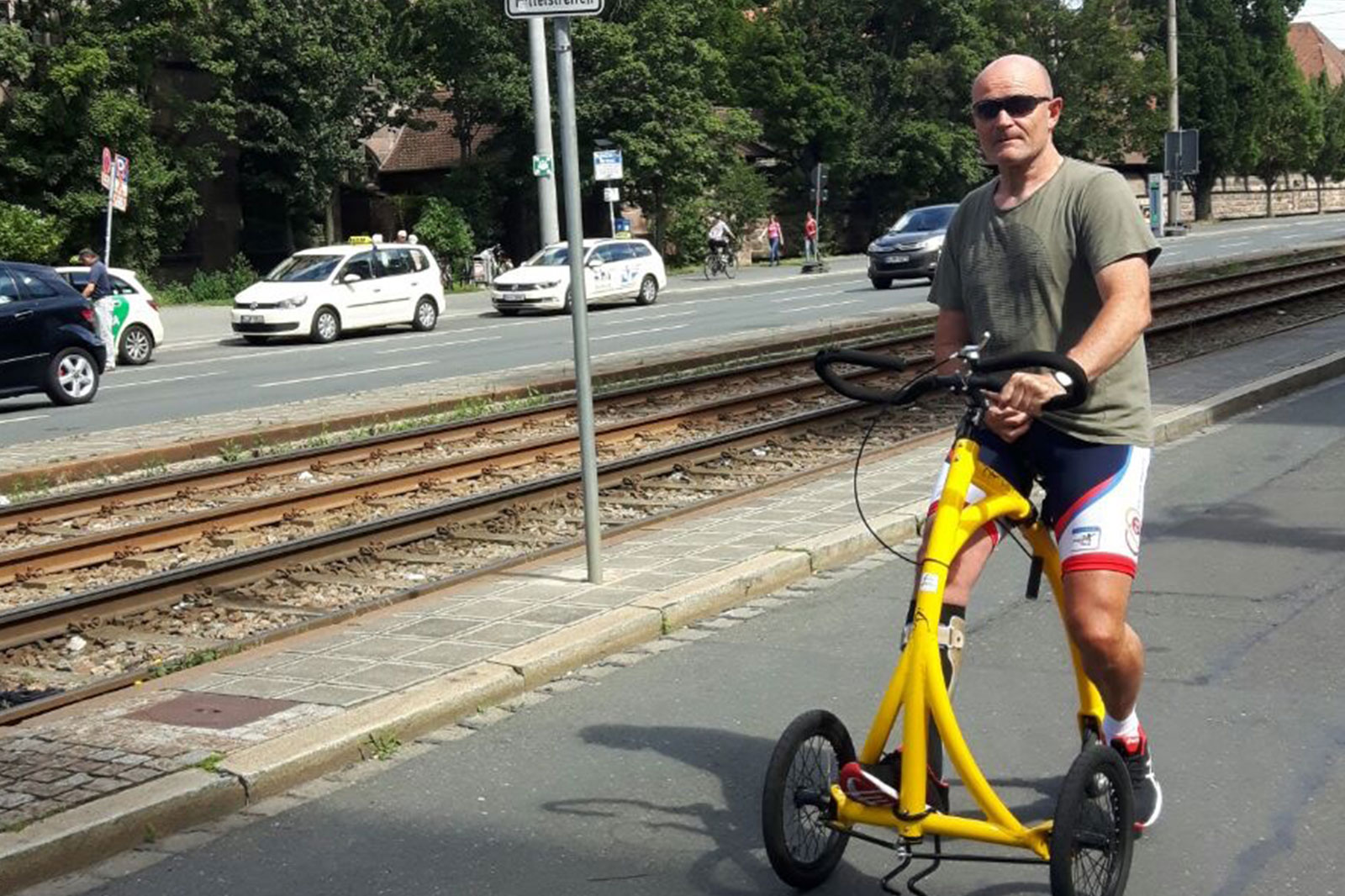
I also took the Alinker with me on our first holiday after my stroke. We went by train and plane to a large German city. I used the Alinker all week as a means of transportation, including trips to shops and museums. Needless to say, this surprised many, but only generated very enthusiastic reactions!
For over six months now, I’ve had nothing but positive experiences with the Alinker. I think the Alinker could be a valuable tool for many people with various disabilities and conditions to regain mobility. Think, for example, of various neurological conditions, partial paralysis, stability issues, loss of strength, muscle diseases, amputations, MS, but also for (sports) rehabilitation, etc.
The Alinker offers excellent stability, both when mounting and dismounting, and when used whether walking or scooting. It can be propelled with one leg and steered or operated with one arm. Even though I’m partially paralyzed, I can even disassemble the Alinker and place it in the car! Very easy to use.
With the correct posture on the Alinker, which naturally varies from person to person, the energy expended is used solely for propulsion. Shock loads are minimal; the slight jolts from uneven surfaces are largely absorbed by the suspension seatpost. Furthermore, the amount of muscle power (energy) required to get the Alinker moving is relatively small. However, using the Alinker does require some practice (possibly with a physiotherapist or occupational therapist).
For me, the Alinker is a great way to get back on track. I’ve recorded my findings so others can share them. I hope this will inspire and encourage people to exercise, especially in sports, and to continue doing so. This is because it has a (very) positive effect on the rehabilitation process and on regaining and maintaining vitality.
In addition, it also affects your personal well-being when you move independently among people again with an Alinker.
Another important social aspect is that you can’t “read” someone’s disability from the Alinker. Furthermore, the Alinker simply has a sporty, cool look that also enhances the social aspect. In short, an ideal mobility aid!
We at “Brain Injury on Tour” have now purchased the first three Alinkers! We’re going to give them to rehabilitation centers and physiotherapy practices so that as many people with ABI as possible, and of course other people with disabilities, can experience the possibilities of the Alinker! At “Brain Injury on Tour,” we continue to advocate for adapted rehabilitation cycling and walking aids! This way, people can participate more actively in life again!
Some photos and videos of my experiences can be found on my Facebook, Instagram or website.
Think possibilities, not limitations! Move and live!
Listen to Wilco’s radio interview with Radio 1 Twente here here